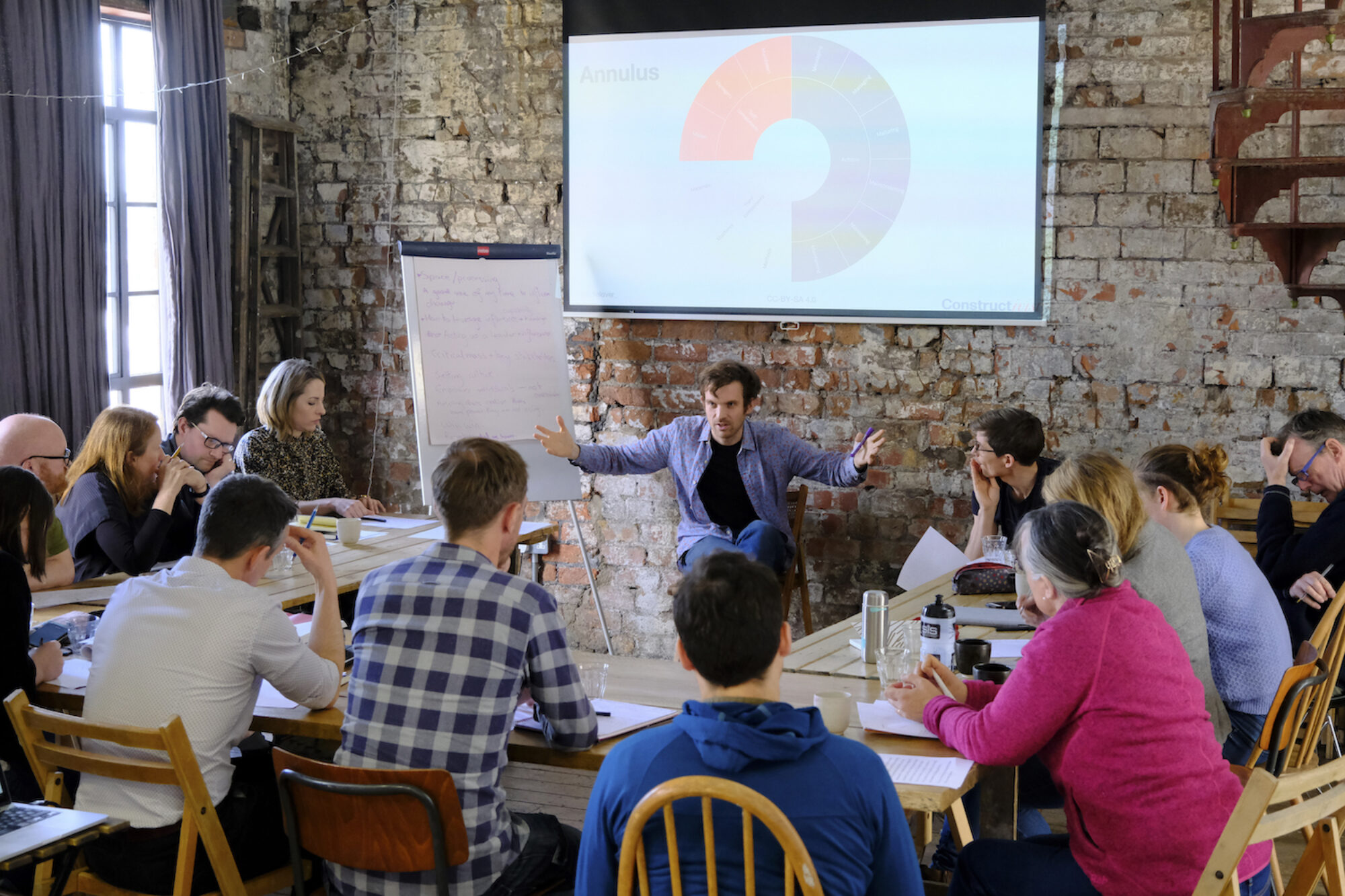

Last week I was teaching in conflict in design teams on the Sustainability Leadership for the Built Environment course at Cambridge.
One particular realisation in that session has stuck with me since.
The model of feedback I’ve been teaching* — setting shared criteria, asking permission, enquiring into responses — is essentially a collaborative model. It relies on both people being interested in the other person and their work.
The alternative is something quite different.
In a more competitive mode of feedback, one person asserts a view on their own terms, and the other responds by defending. There’s less interest in understanding, and more focus on holding position.
Both show up in practice. But they lead to very different conversations.
What I noticed in the room is how easily we slip away from both — into something softer, where feedback is diluted to avoid discomfort.
Which probably explains why this remains difficult.
One of the things that I appreciate about teaching this material is that it never quite settles. Each session reveals something new about how these dynamics actually play out.
Lots more to learn.
*I learnt this model of feedback from Nick Zienau in his course at Intelligent Action: Leading and Influencing.